



INSTITUTE OF MIND STUDIES MUMBAI for cultivation of Mind by Dr. Deepak Rao

INSTITUTE OF MIND STUDIES is a Mind Center to cater to the ever-growing imbalances of the mind faced by the urban individual.

Each one of us has a unique mental makeup. Our personality is shaped by our genetics, our childhood trauma or experiences, peer pressures, our social structure, expectations of our family members, the nuances of a high pressure life, our job environment and our unfulfilled desires.

Its not unusual to face mind issues off and on. Mood disturbances such as depression or anger episodes, anxiety or unnecessary worries, future fears and paranoia, sleeplessness or drowsiness, lack of energy or enthusiasm and phobias or hysteria are common in almost all of us in varying proportions at varying periods in our lifetime.

Most of the time, mind imbalances are by themselves harmless, though at times they can make us take extreme steps such as suicide, self-destruction or violence. If not radical reactions, disordered equilibrium in mind can make us take wrong decisions such as impulsively leaving a decent job, shifting overseas from a good home to an unstable environment or splitting from our dear ones without sufficient reason. Hence, we must address our mind issues on time, ensuring a return to the stable sanity under guidance of a qualified mind teacher/ specialist. Just like you go to a physician to take care of your body in illness, you need to take care of your mind in distress.

At IMS we study how to cultivate the mind and grow in mental potential. Our focus is on three key areas of the mind.
(A) COGNITIVE GROWTH: Application of intellect to various key areas of career, societal status, relationship & recreation. We study of oriental philosophy of Samurai code, Lao Tzu’s art of life, Confucius social ideology, Sun Tzu’s art of war, we enhance our understanding of tactics and strategies of success.
(B) VOLITION: Development of will power, determination, resilience & confidence via study of Battle protocols, commando sops & management wisdom.
(C) SPIRITUALITY: The wisdom to understand, accept & manage change, adversity, grief of loss, ageing, disease, disability & death. We use Zen & buddhist philosophy to grow in spirituality.
(D) MIND DISORDERS: Using scientific psychotherapy, psychoanalysis, existential & cognitive behavioral therapy to deal with discord of the mind by understanding the subconscious roots causing it.

JOIN US FOR TRAINING YOUR MIND


Anyone who is interested in
Studying the Mind
Spiritual development
Emotional growth
Building Volition (Will power & Resilience)
Interest in Psychology & Psychoanalysis
Meditation & Contemplation
Hypnotherapy in harnessing Mind

BENEFITS OF MIND TRAINING

  • Unlock Mental Potential for Work Efficiency
  • Boost Confidence, Self Esteem, Focus & Concentration
  • Treat Phobias, Fears
  • Stress Anxiety & Worry
  • For Depression, Grief & Loss
  • Weight Loss & Overeating
  • Smoking Cessation & De-addictions
  • Improve Relationships & Emotional EQ
  • Build Discipline & Will
  • Sleep Disorders
  • Reduce Pain perception, Migraines, Headaches, Irritable Bowel, Psychosomatic diseases

We welcome to consult us and avail of our expertise in healing your mind!

For Mind Training Contact us

Read on below to know more about the theory of the Mind
Theory of What is Mind?

What if there were a quick and simple way to access the deepest parts of your mind, allowing you to alter thoughts, feelings, and behaviors that are not serving you? What if a trained professional could help you use your own mind to control pain, stop smoking, lose weight or cope with depression and anxiety?

Freud’s Model of the Human Mind

Understanding the human mind is at the core of psychoanalytic theory. Since the introduction of the theory of Sigmund Freud in the early 1900’s and despite the many advancements in the study of psychoanalytic theory Freud’s basic thoughts retain a strong hold on the shaping of views regarding the theory of the human mind.

The origin of the meaning of the mind offers a long and rich history. It was not until the 14th and 15th centuries that the generalization of mind to include all mental faculties, thought, volition, feeling, and memory gradually developed. In the late 19th and early 20th century brought psychology to the forefront as a respected science.

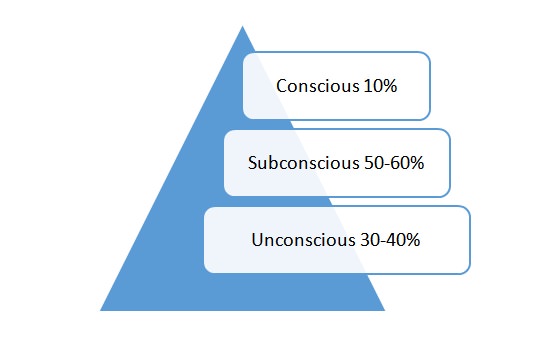
A part of our mind operates below our level of awareness. This part of the mind is called the subconscious, which is said to house dreams, thoughts, feelings, memories, and associations. We’re able to access the subconscious during hypnotic states. Let’s say, for example, that you become inexplicably anxious whenever you’re around people who have big muscles. Through hypnosis, you may remember a series of traumatic experiences which you have forgotten: as a child, you were repeatedly bullied by a boy with large muscles. These experiences are housed as memories within your subconscious. As a result, you developed the belief that people with big muscles are bullies. As you grew older, you let go of that belief by telling yourself that there are many people with big muscles who are not bullies. Nonetheless, when you see someone with big muscles, you still feel anxious. This is because you still carry that belief – that big muscles equal bullying – deep in your subconscious.

Your Subconscious mind is 30,000 times more powerful than your conscious mind!
Therefore, the sub-conscious mind needs to be programmed to benefit the individual.

Freud’s Conscious Mind

Since consciousness is best understood as having an awareness of something, being able to call it to mind, it would seem simple enough to qualify only those events we can recall as the activities of the human mind. While an important partner in the triad of the human mind, the conscious mind serves as a scanner for us. It will perceive an event, trigger a need to react, and then depending on the importance of the event, store it either in the unconscious or the subconscious area of the human mind where it remains available to us.

Freud’s Subconscious Mind

Your subconscious is the storage point for any recent memories needed for quick recall, such as what your telephone number is or the name of a person you just met. It also holds current information that you use every day, such as your current recurring thoughts, behavior patterns, habits, and feelings. The workhorse of the mind/body experience Freud’s subconscious mind serves as the minds random access memory (RAM). “Thus the unconscious mind can be seen as the source of dreams and automatic thoughts (those that appear without any apparent cause), the repository of forgotten memories (that may still be accessible to consciousness at some later time), and the locus of implicit knowledge (the things that we have learned so well that we do them without thinking).”

Freud’s Unconscious Mind

The unconscious mind is where all of our memories and past experiences reside. These are those memories that have been repressed through trauma and those that have simply been consciously forgotten and no longer important to us (automatic thoughts). It’s from these memories and experiences that our beliefs, habits, and behaviors are formed.

The unconscious mind is really the cellar, the underground library if you like, of all your memories, habits, and behaviors. It is the storehouse of all your deep seated emotions that have been programmed since birth.

The id, ego, and super-ego are three distinct, yet interacting agents in the psychic apparatus defined in Sigmund Freud’s structural model of the psyche.

The three parts are the theoretical constructs of how the activity and interaction in our mental life is described. According to this Freudian model of the psyche, the id is the set of uncoordinated instinctual trends; the super-ego plays the critical and moralizing role; and the ego is the organized, realistic part that mediates between the desires of the id and super-ego.

There are different types of therapy to heal the Mind.

Freud’s psychoanalytic theory teaches that it is here, in the unconscious mind that necessary change can occur through the use of psychoanalysis.

Hypnotherapy is a type of therapy used to create subconscious change in a patient in the form of new responses, thoughts, attitudes, behaviours or feelings. Have you ever driven your car to a destination without being able to recall the actual journey? This is a good example of a trance-like state where your conscious mind drifts off allowing the unconscious part of the mind to take over; and it is the reason we never forget how to ride a bike too. It is our subconscious doing the work for us!

To know more about Dr. Deepak Rao please visit his site happyheal.com

Copyrighted Image